

Dr Hiwa Asadpour
JQYA Fellow 2025
Academy Fellowship Award
Research area: Corpus/Typological Linguistics and Computational Linguistics (NLP)
Research focus: Hiwa’s research addresses linguistic complexity and resource gaps in understudied languages by combining psycholinguistics, contact linguistics and NLP. His work focuses on the documentation, analysis and revitalization of resource-poor Iranian languages – including Kurdish varieties, Azeri Turkish and Neo-Aramaic dialects. By integrating experimental studies of language processing with the development of computational tools, he aims to bridge theoretical research with practical applications. A core aspect of his work is the creation of educational materials and NLP resources that support marginalized linguistic communities, ensuring that linguistic research contributes to both education and language preservation efforts.
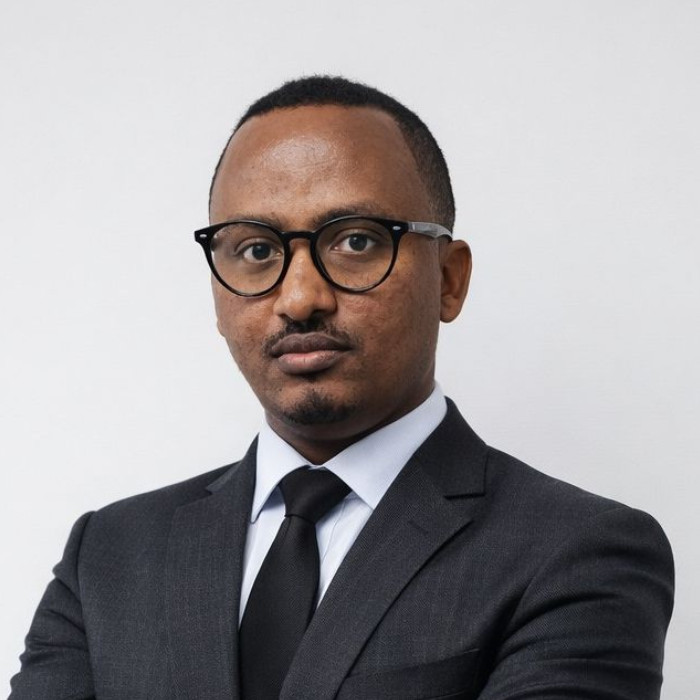
Dr Alula Asfha
JQYA Fellow 2026
Academy Fellowship Award
Research area: Urban Heritage Conservation, Architecture, Cultural Landscapes
Research focus: Alula’s research advances heritage conservation as a framework for post-conflict recovery and urban transformation. He combines archival research, digital documentation (photogrammetry, GIS), and field-based inquiry to analyse historic urban landscapes under conditions of disruption. His work places particular emphasis on vernacular architecture as a knowledge system and explores how heritage can inform planning, governance, and resilience.

Dr Burcu Gürbüz
JQYA Fellow 2025
Academy Fellowship Award
Research area: Mathematics
Research focus: Burcu is a mathematician working in the field of applied mathematics, focusing on mathematical modelling and qualitative analysis of dynamical systems, with theoretical and numerical applications in mathematical biology. Among other works, Burcu uses mathematical methods to construct and analyse models that improve our understanding of the complexity of mathematical models with implications for climate change.
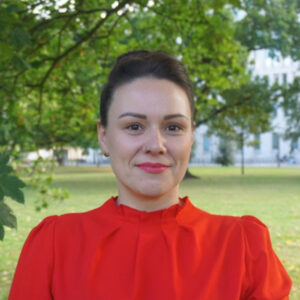
Dr Maria Cárdenas
JQYA Fellow 2026
Academy Fellowship Award
Research area: Political Sociology, Peace and Conflict Studies, Relational International Relations, Pluriversality
Research focus: María’s research focuses on two directions: On the one hand, she explores racialization and ethnicization as postcolonial concepts that drive, as markers of difference, marginalization, violence, and conflict. On the other hand, she explores how ancestral onto-epistemologies —such as those from Indigenous, Afro-Colombian, Raizal, and Rom-Gitano communities— can help envision pluriversal and relational new beginnings, and how these groups interact with the hegemonic order by challenging or reinforcing narratives, imaginaries, and boundaries between worldings at local and global scales. To do this, she works closely with ancestral intellectuals and integrates diverse theories and disciplines, including Political and Global Sociology, Peace and Conflict Studies, Critical Security Studies, International Relations, Indigenous epistemologies from Turtle Island and Abya Yala/Latin America, Afro-Latin and Caribbean philosophies, and Epistemologies of the South.

Dr Ana Clemente
JQYA Fellow 2025
Academy Fellowship Award
Research area: Cognitive Neuroscience
Research focus: Ana investigates the computational and neurobiological mechanisms of cognition and behaviour, focusing on perceptual, evaluative and creative processes.
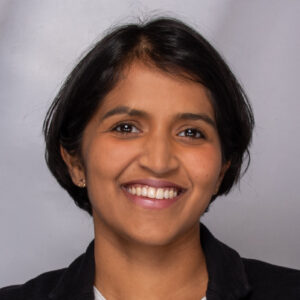
PD Dr Sharmili Edwin Thanarajah
JQYA Fellow 2026
Academy Fellowship Award
Research area: Psychiatry / Neuroscience
Research focus: Sharmili Edwin Thanarajah is a physician-scientist working in the field of metabolic psychiatry, focusing on the interaction between metabolic regulation and brain function in affective disorders. Her research aims to understand how metabolic dysregulation, including insulin resistance, dietary factors and gastrointestinal hormones, influences neural circuits involved in motivation, reward processing and emotional regulation. Using translational approaches that combine human neuroimaging, behavioural paradigms and interventional studies, she investigates mechanisms linking metabolism, the autonomic nervous system and brain function. Her work seeks to identify biologically defined subtypes of psychiatric disorders and to develop metabolically informed treatment strategies.
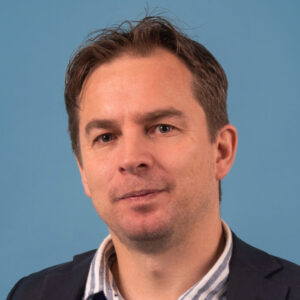
Dr Daniel Fairfax
JQYA Fellow 2026
Sabbatical Fellowship Award
Research area: Contemporary film and media theory
Research focus: Daniel Fairfax is a lecturer at the Institute of Theater, Film and Media Studies at Goethe University Frankfurt, where he coordinates the Master in Audiovisual and Cinema Studies. Daniel’s research has focused on French film theory in the post-1968 period, resulting in the two-volume monograph The Red Years of Cahiers du Cinéma (1968-1973) (Amsterdam University Press, 2021), and he has translated the writings of Jean-Louis Comolli, Christian Metz and Jean-Pierre Meunier. His current research project looks at developments in film and media theory in the neoliberal era. Daniel is also a regular contributor to and former editor of the Australian online film journal Senses of Cinema.
Dr Benjamin Haas
JQYA Fellow 2026
Academy Fellowship Award
Research area: Special Education and Intersectional Inclusion Research
Research focus: Benjamin’s research examines the intersectional dynamics of inclusion and exclusion in educational contexts, with a particular focus on the construction of dis/ability. His work explores how processes of doing dis/ability unfold within institutional practices and how these are entangled with broader relations of power, including ableism, racism, class, and gender. In current interdisciplinary projects, he investigates the production of ‘school readiness’ in preschool settings, focusing on caring dispositions to conceptualise care as a relational practice that enables participation. In addition, he explores participatory formats that centre young people’s perspectives, with particular attention to marginalised masculinities. Methodologically, his work draws on discourse ethnography, discourse and dispositive analysis, praxeological approaches, and interpretive sense-making.

Dr Katharina Hoppe
JQYA Fellow 2025
Sabbatical Fellowship Award
Research area: Sociological and Feminist Theory, Sociology of Social Inequalities, Sociology of Nature Relations and Science
Research focus: Katharina’s research focuses on the intersections of sociological and feminist theory, the sociology of social inequalities, and the sociology of science as well as relations to nature. Currently, she is working on a book project on the sociology of dependency. The project is based on the thesis that modern societies are constitutively dependent on the denial of dependencies, but that hegemonic practices of denial – such as the denial of the dependence on natural resources, care, and infrastructures – are themselves becoming precarious in the face of current ecological, economic, and political crises. Drawing on classical sociological theory (e.g. Durkheim and Simmel) as well as sociologies from the margins (e.g. feminist, postcolonial and more-than-human approaches), the book outlines a theory of society as a critical theory of dependency relations.
Dr Rana Hussein Ali
JQYA Fellow 2026
Academy Fellowship Award
Research area: Bioenergetics, structural biology, biochemistry, biophysics
Research focus: Her research investigates how photosynthetic supercomplexes operate as dynamic, adaptable membrane assemblies. By integrating cryo-electron microscopy, time-resolved structural approaches, and advanced lipid reconstitution systems, she aims to uncover the molecular principles governing protein–lipid interactions, quinone dynamics, and redox regulation, as well as how these systems function at the limits of stability and efficiency.
Dr Matthias Jost
JQYA Fellow 2026
Academy Fellowship Award
Research area: Molecular evolution of plants, heterotrophic plant genomes
Research focus: Matthias studies the evolutionary biology and genomics of plants, with particular emphasis on heterotrophic (i.e., parasitic and mycoheterotrophic) lineages. Among other approaches, he employs herbariomics, comparative genomics, and phylogenomics to further our understanding of the genomic foundations of plant diversity and the effects of tropic mode transitions. He is particularly interested in the genomic drivers and consequences of such transitions, as well as those underlying broader phenotypic changes in plants.
Dr Niels Meijer
JQYA Fellow 2026
Academy Fellowship Award
Research area: Paleoclimatology, Geology
Research focus: Niels uses ancient soils to reconstruct climate during extreme greenhouse conditions in Earth’s history, focusing primarily on the Cenozoic Era (the past 66 million years). Isotope geochemistry and fossils preserved in these soils act as proxies that record past temperature and precipitation. These proxy data provide benchmarks to test the performance of climate model simulations under extreme warming scenarios expected from continued anthropogenic warming.

Dr Dhara Patel
JQYA Fellow 2025
Academy Fellowship Award
Research area: Urban Studies, Migration, and Architecture
Research focus: Dhara’s current research work examines how Highly Skilled Indian Migrants (HSMs) reshape urban spaces by navigating housing markets, redefining urban boundaries, and negotiating cultural identities within restrictive housing frameworks. Her research integrates urban sociology and architectural ethnography to explore residential segregation and socio-spatial inequalities in global cities.

Dr Antje Peters
JQYA Fellow 2026
Academy Fellowship Award
Research area: Cognitive Neuroscience
Research focus: Antje’s current research focuses on the neurobiological foundations of conscious perception. A central question of her work is which neural processes support not only the onset but, more importantly, the maintenance of conscious perception over time. Her research therefore addresses a fundamental yet comparatively underexplored aspect of consciousness: its temporal continuity. Building on previous work using surface EEG and fMRI, Antje plans to employ intracranial EEG to investigate neural. This method offers exceptional temporal and spatial precision for identifying the neural correlates of sustained conscious experience. In the long term, a deeper understanding of the neural processes that maintain conscious perception in the temporal lobe may open new paths for the targeted treatment of temporal lobe epilepsy.

Dr Johannes Petry
JQYA Fellow 2025
Academy Fellowship Award
Research area: International Political Economy, Politics of Global Finance
Research focus: Johannes is a political economist researching post-crisis transformations of the global financial system and their impact on the global norms, institutions and governance that underpin the global economy. His research focuses especially on the internationalization of China’s capital markets, financial market infrastructures, the development of non-Western financial systems and changing actor constellations in global finance. His most recent work investigates the impact of geopolitical tensions and how they reconfigure the relationship between states, markets and power within the global financial system.

Dr Johanna Wilmes
JQYA Fellow 2025
Academy Fellowship Award
Research area: Childhood Studies
Research focus: Johanna‘s research focuses on how young people from different backgrounds perceive and respond to social inequalities, how they position themselves within them, and how they relate their experiences to broader societal complexities. The research highlights their voices, perspectives, and agency, as well as their vulnerabilities. Previous studies show that societal crises and burdens limit young people’s sense of self-efficacy, with many feeling unheard—especially those from marginalized backgrounds or structurally disadvantaged areas. By analysing young people’s lived experiences, Johanna aims to understand how they make sense of social inequalities. Methodologically, she conducts research using participatory mixed methods approaches.

Dr Edgar Wong
JQYA Fellow 2025
Academy Fellowship Award
Research area: Evolutionary Biology
Research focus: Edgar’s research centers on how different organisms evolve and adapt to different environment niches. He is especially interested in understanding the molecular basis of environmental adaptation in widespread species, using genomics and transcriptomics. This has both ecological and societal relevance as it informs biodiversity management.

Dr Henrique Fernandes de Aguiar Valim
JQYA Fellow 2024
Academy Fellowship Award
Research area: Circadian Rhythms in Symbioses
Research focus: Nearly all organisms across the tree of life have evolved circadian clocks, timekeeping mechanisms that help them to respond to changes in environmental conditions. Within organisms, the clocks of different tissues work in concert to optimize fitness. However, our understanding of how the clocks of different organisms contribute to the fitness of symbioses remains in its infancy. Henrique’s research investigates the circadian systems of the two primary partners in the lichen symbiosis: the fungal host and its algal partner. By combining population genomics of lichens across climate gradients with time series transcriptomics of lichen partners in symbiosis and in independent cultures, he hopes to address these key questions: (A) how do the circadian clocks of lichen symbionts contribute to the symbiosis? (B) how do symbionts affect one another’s circadian rhythms? (C) how do symbiont clocks contribute to adaptation along climate gradients?

Dr Elena M. Galeano Weber
JQYA Fellow 2024
Academy Fellowship Award
Research area: Cognitive Development and Psychology
Research focus: Elena studies human learning and memory processes such as working memory, the ability to briefly store information to make it available for complex cognitive processes. Her research focuses on aspects that limit cognitive capacity, i.e., mnemonic precision and cognitive fluctuations, with the aim of identifying mechanisms that might help to understand interindividual differences in cognitive developmental trajectories. Currently, she is investigating the effects of generative learning on knowledge and attitude towards conservation issues and the quality of support diagnoses based on child and environmental features in unsupervised machine learning models. To investigate these topics, she has used a variety of methods, e.g., cognitive modeling, neuroimaging, and eye tracking.

Jun.-Prof. Dr David Paul Gerards
JQYA Fellow 2024
Academy Fellowship Award
Research area: Romance and General Linguistics
Research focus: David’s research seeks to holistically understand grammatical variation by bringing together experimental and big data digital approaches. In doing so, he conceives of linguistics as a discipline at the crossroads between the humanities and the natural sciences and combines linguistic theory building and empiricism. While he mainly focuses on Spanish and Portuguese – both in Europe and overseas – David is also particularly interested in comparative linguistics and in the structural and social aspects of Romance minority languages such as Romansh, Galician, and Francoprovençal. Together with colleagues from Portugal and Brazil, he is currently developing a multinational research project on the nativization of Portuguese in post-colonial Angola. A further mission of David’s is to contribute to the transfer of linguistic knowledge from academia to society.
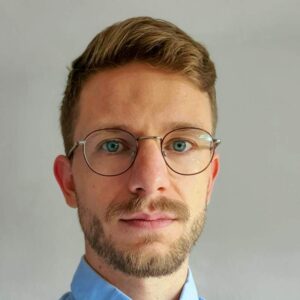
Dr Leon Hilgers
JQYA Fellow 2024
Academy Fellowship Award
Research area: Evolutionary and Ecological Genomics
Research focus: Leon’s research focuses on understanding the molecular basis and evolutionary ecology of innovation and adaptation. With the climate and biodiversity crises escalating at alarming rates, Leon particularly focuses his attention towards understanding innovation and adaptation affecting survival in the Anthropocene. To achieve this goal, he uses naturally occurring diversity and integrates a variety of genomics tools with morphological and ecological datasets.

Dr Katarina Pitasse Fragoso
JQYA Fellow 2024
Academy Fellowship Award
Research area: Political Philosophy
Research focus: Katarina is a Humboldt Postdoctoral Fellow at the Chair of International Political Theory and Philosophy at Goethe University Frankfurt. Her research is in Political Philosophy, focusing primarily on issues related to relational inequalities, poverty, and oppression. Currently, she is working on mapping structural and historical aspects of urban injustices (especially, related to residential segregation, housing deprivation and gentrification), and the analysing the ethics of public policies at the local level, with special attention to participatory local governance.

Dr Rosa Celia Poquita-Du
JQYA Fellow 2024
Academy Fellowship Award
Research area: Experimental Ecology and Genomics
Research focus: Rosa’s research focuses on obligate symbiotic systems, in particular, those that mainly involve a photosynthetic algal partner such as coral and lichen. She is interested in acclimatization mechanisms of a holobiont to changing environments and examining phenotypic variations using a combination of physiological trait measurements and ‘omics tools (genomics and transcriptomics).

Dr Tristan M. Stöber
JQYA Fellow 2024
Academy Fellowship Award
Research area: Computational Neuroscience
Research focus: Tristan’s research agenda revolves around deciphering how the brain constructs and utilizes its internal model of the world, known as a cognitive map. He seeks to both solve fundamental questions in neuroscience and develop novel AI systems surpassing current technologies in reliability, data efficiency, and energy usage. To achieve this, Tristan and his team build neural networks to analyze experimental data and address real-world challenges. His ongoing projects primarily focus on information processing within the hippocampus, while also examining the development of epilepsy.

Dr Oliver Völker
JQYA Fellow 2024
Sabbatical Fellowship Award
Research area: Comparative Literature
Research focus: Oliver’s research explores the influences between literature and the natural sciences (particularly geology) from European Romanticism to contemporary discussions of the Anthropocene. In several peer-reviewed articles, he has analysed the relationships between narrative or lyrical forms and scientific representations of the Earth, atmospheric phenomena and the ocean in European Romanticism and nineteenth-century literature. Oliver’s current research explores the role of hatred in German, English and French drama of the Baroque and Enlightenment periods. Beginning with a close analysis of hatred in classical Greek and Roman rhetoric, the project shows how hostile emotions such as hate, contempt and enmity shape the structure and language of mourning play and Enlightenment tragedy. The overall aim is to reconstruct a particular aesthetics of hatred and to explore its relationship to specific dramatic and linguistic forms such as the monologue and the curse.